
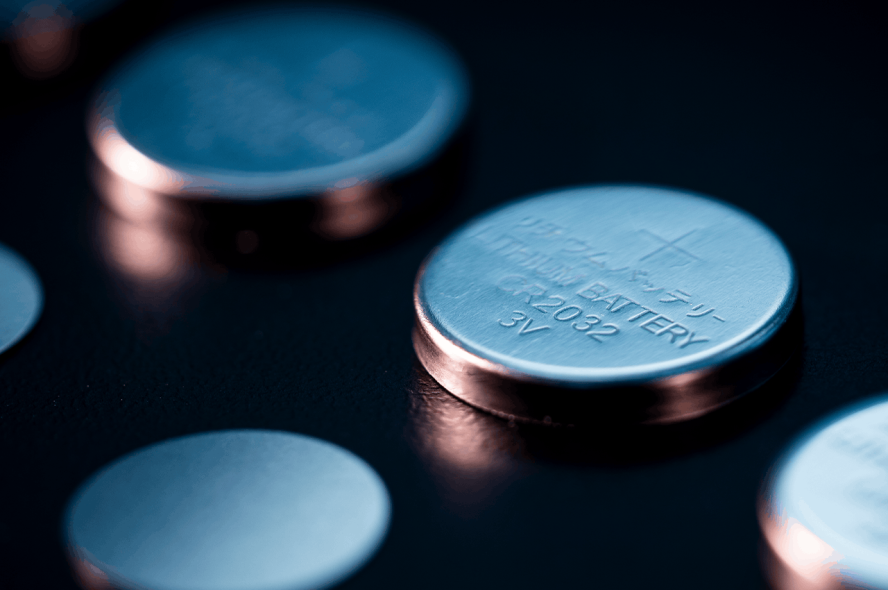
Batteries and electrochemical capacitors are at the heart of electrifying transportation and deploying renewable energy generation on the power grid. TEMI faculty design the advanced electrolytes, electrodes, and interfaces that allow these devices to store more energy, charge faster, last longer, and operate safely. Our collaborative research spans ion transport and solvation dynamics, nonflammable ionogels, computational modeling of electrode materials (from ab initio to continuum modeling), and operando thermal diagnostics of charging and degradation. By partnering with industry, we translate these fundamental insights into life-extension strategies and critical material recovery, securing a circular battery supply chain.
Core Faculty

Graham Leverick
Keywords: Electrolytes, Ion Transport, Solvation, Electrochemical Interfaces, Electrochemical Energy Storage and Conversion, Sustainable Energy Materials
Graham Leverick is an Assistant Professor in the Department of Chemical and Biological Engineering. Developing next-generation energy materials is often limited by gaps in fundamental understanding. The Leverick Lab identifies and digs into these gaps, asking questions such as what sets the energy barrier for ion hopping or how ions shed their solvent at interfaces. Using model systems and whatever experimental or computational tools are needed, the group builds the knowledge required to design new electrolytes that solve real problems in energy storage and conversion, advancing TEMI’s mission.

Matthew Panzer
Keywords: Ionic Liquids, Ionogels, Electrolytes, Zwitterions, Ion Transport, Energy Storage
Matthew Panzer is the E Ink Professor in the Department of Chemical and Biological Engineering and Dean of Research for the School of Engineering. In the Green Energy and Novel Electrolytes Lab, researchers seek a deeper understanding of how solution-processed materials, including nonvolatile, nonflammable, and flexible ionic liquid-rich gel (ionogel) electrolytes in particular, can be effectively designed and incorporated into novel electrochemical devices to realize safer energy storage. A key thrust of his research has been to uncover the self-assembly and ion solvation behaviors of zwitterionic functional groups within nonaqueous, ion-dense electrolyte environments.

Bin Wang
Keywords: Computational Catalysis, DFT, Molecular Dynamics, Machine Learning, Electrochemistry
Bin Wang is currently the Robert and Marcy Haber Endowed Professor in Energy Sustainability in the Chemical and Biological Engineering Department at Tufts University. His research centers on computational modeling of nanoscale materials, with a focus on their applications in catalysis, separation, optoelectronics, and energy storage systems such as batteries. His group employs a combination of density functional theory, machine learning, and advanced simulation methods to gain fundamental insights into energy transfer and chemical transformations at material interfaces.
Also in: Catalytic Materials

Laurent Pilon
Keywords: Transport and Interfacial Phenomena, Electrochemical Materials, Operando Calorimetry, Superconductors, Cryogenics, Circularity
Laurent Pilon is the inaugural Director of the Tufts Epsilon Materials Institute and the Epsilon Energy Materials Innovation Professor in the Department of Mechanical Engineering. His Gradient Lab works at the intersection of transport phenomena, interfacial phenomena, and materials science for sustainable energy technologies. The group develops operando calorimetry and electrothermal methods that reveal the thermal signatures of charging and degradation in batteries and electrochemical capacitors. Building on his experience as Associate Director for Technology and Program Director at ARPA-E, where his programs addressed high-temperature superconducting tapes, the circularity of the battery supply chain, and advanced manufacturing, he is launching new research on cryogenics and high-temperature superconducting technologies.

Ayse Asatekin
Keywords: Membranes, Polymer Science, Self-Assembling Polymers, Separations, Surface Chemistry, Polymers for Energy Storage
Ayse Asatekin is a Professor in the Department of Chemical and Biological Engineering. She designs self-assembling polymers that create nanostructure and control surface chemistry, and uses them to make novel membranes for water treatment, small-molecule separations, and energy-efficient smart filtration. Her research connects to TEMI through polymer materials for energy storage developed in interdisciplinary collaborations, as well as systems that combine separation with catalysis and self-cleaning materials with controlled wetting. She received bachelor’s degrees in chemical engineering and chemistry from the Middle East Technical University in Ankara, Turkey, and her Ph.D. in chemical engineering from MIT, followed by postdoctoral research at MIT. She co-founded Clean Membranes, Inc. and serves as Senior Scientific Advisor to ZwitterCo, Inc., a Tufts spin-out commercializing the extremely fouling-resistant zwitterionic membranes developed in her lab.
Also on: Strategic Capabilities Team